
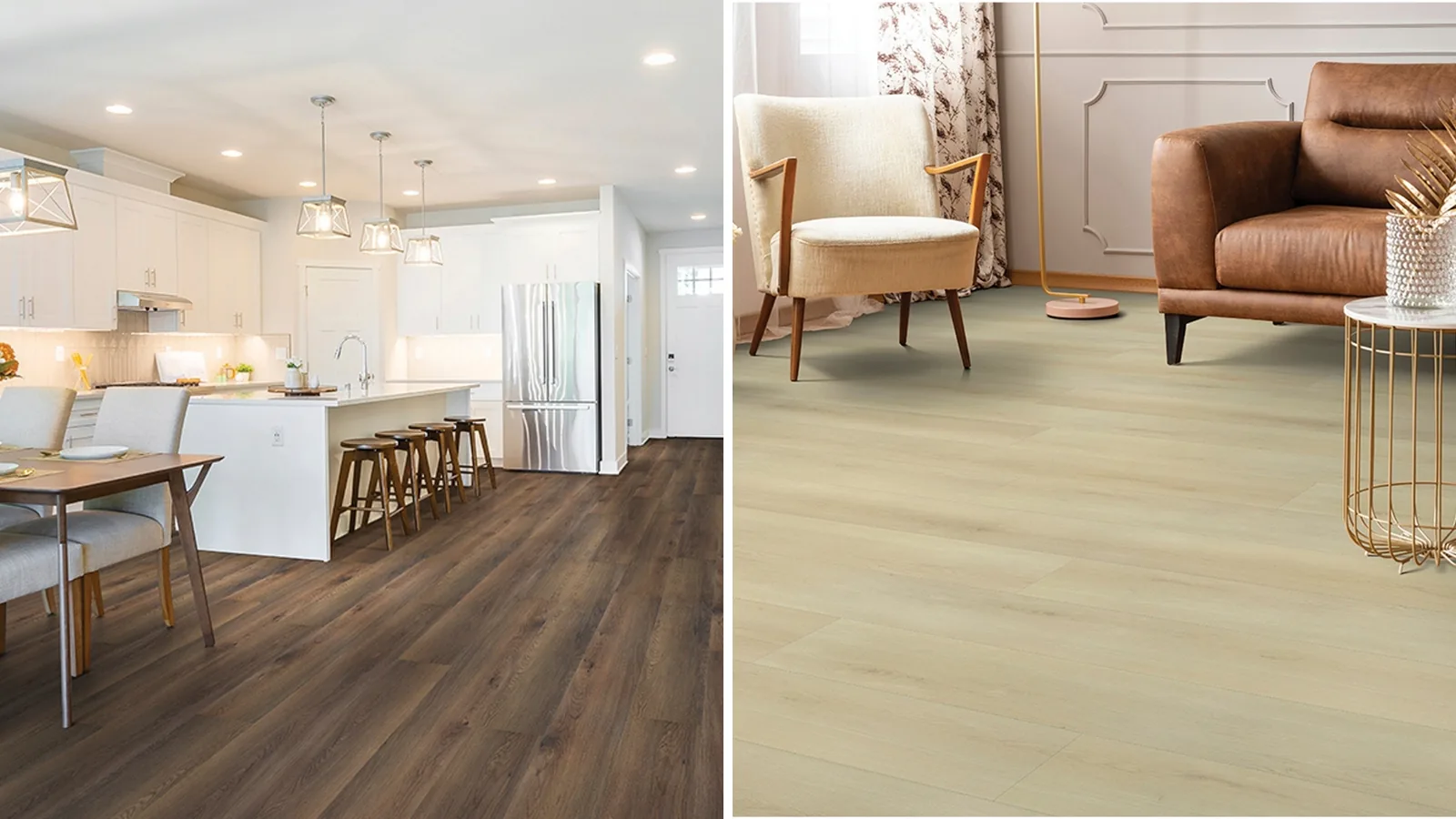
Quick answer: SPC vinyl flooring is a rigid-core luxury vinyl whose dense core helps the plank resist indentation and dimensional change. The acronym may be expanded as solid polymer core or stone plastic composite, depending on the source. Compare the exact product's construction, approved rooms, locking system, underlayment, installation guide, and product documentation before choosing.
What does SPC mean in flooring?
SPC names one construction used in rigid-core vinyl flooring. The Resilient Floor Covering Institute uses solid polymer core. Beaulieu Canada uses stone plastic composite. Both sources place SPC within engineered or multilayer vinyl products, yet their wording shows why the acronym should be checked against the exact manufacturer's documents.
The core is only one part of the finished plank. A product can also have a protective finish, wear layer, printed decorative layer, locking profile, and attached pad. The materials, dimensions, room approvals, care rules, and documented terms can differ from one collection to another.
Where SPC fits among vinyl flooring types
Vinyl is a broad category. RFCI separates flexible LVT and LVP, rigid core, and sheet vinyl. Beaulieu Canada likewise describes engineered luxury vinyl, glue-down luxury vinyl, and sheet vinyl as different formats.
SPC normally appears in the rigid-core group. Many products are sold as planks or tiles and use a floating click-lock installation, although the manufacturer must confirm the approved method. Flexible glue-down vinyl and sheet vinyl use different constructions and installation details.
If your decision is between entire material categories, Ultra's laminate-versus-vinyl guide covers the broader comparison. This guide stays with the narrower question of what SPC identifies within vinyl.
How an SPC vinyl plank is built
Layer names vary, so use the product diagram and technical sheet rather than assuming every SPC plank follows one formula.
| Part of the product | What to verify |
|---|---|
| Surface finish and wear layer | The named finish, wear-layer specification, embossing or texture, care instructions, and exclusions |
| Decorative layer | How the manufacturer describes the printed visual or design layer |
| Rigid SPC core | How the manufacturer defines SPC and which performance claims apply to that core |
| Overall format and dimensions | Whether it is a plank or tile, plus its length, width, and total thickness |
| Joint profile | Whether the edges lock and which floating or glue-down method the manufacturer approves |
| Attached underlayment, when present | Its material, acoustic information, subfloor requirements, and whether another underlayment is allowed |
A current Beaulieu Canada SPC collection, for example, identifies its own total thickness, attached cork underlayment, locking system, floor-level approvals, and product documents. That example is useful because it shows how much information sits beyond the three-letter label. It does not establish what Ultra currently stocks or what another SPC product allows.
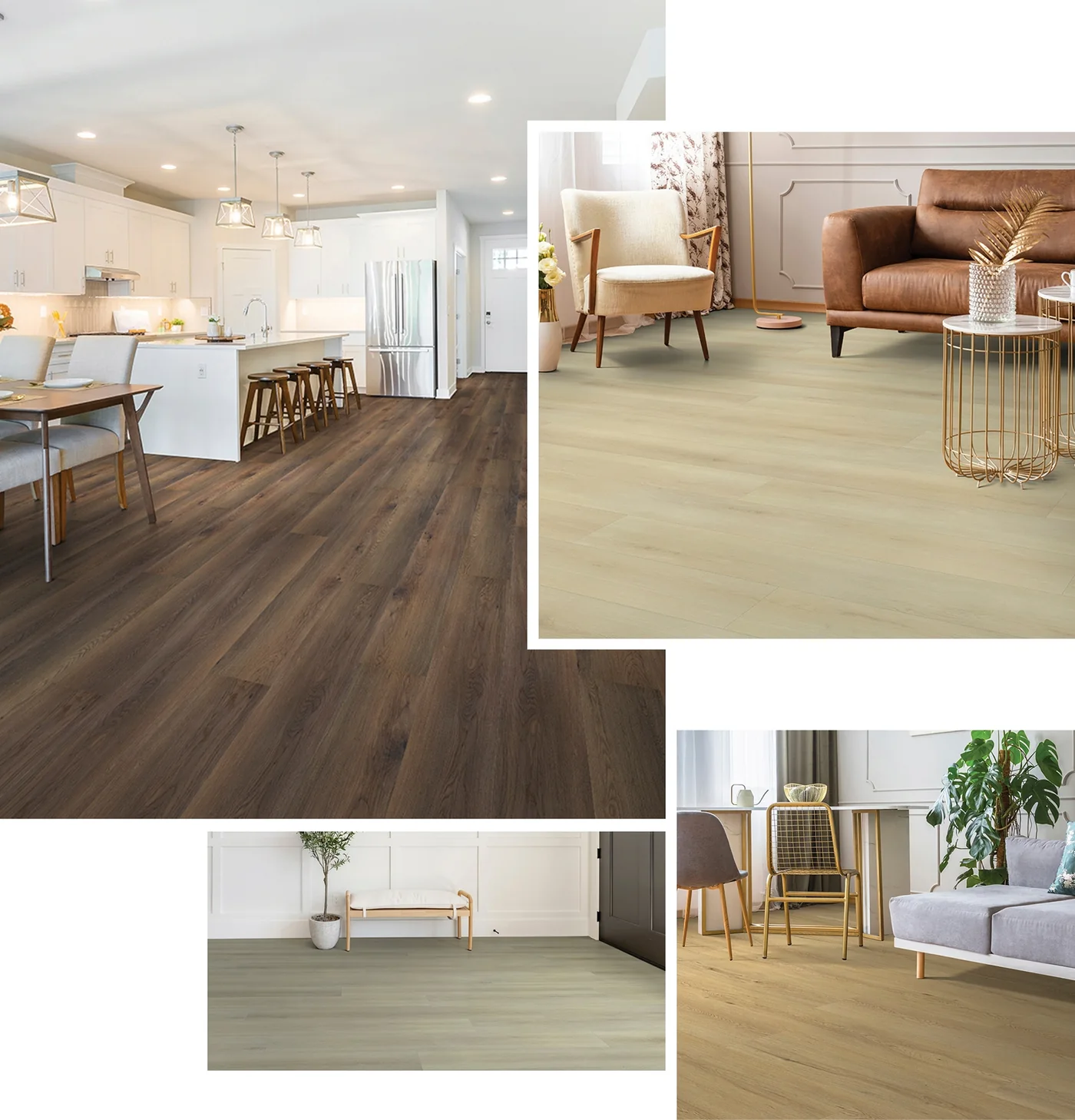
What the dense core can change
RFCI describes SPC as a solid polymer core that is denser than an expanded WPC core. The institute associates that density with greater resistance to indentation, improved dimensional stability, and favourable temperature stability. Those are category-level characteristics, not a guarantee that every SPC product performs identically.
Rigidity does not replace product-specific installation requirements. Check the exact instructions for substrate flatness, moisture, expansion space, underlayment, fixed objects, transitions, room conditions, and the handling of damaged locking edges.
Is SPC vinyl flooring waterproof?
Most SPC planks carry a waterproof claim, and the manufacturer sets its conditions and exclusions. RFCI describes rigid-core constructions as having water-resistant capabilities. Water can still reach the subfloor through seams and edges, so spills should not be left to sit.
Read the installation guide, care guide, and product documentation together. Check what they say about topical spills, standing water, moisture beneath the floor, plumbing leaks, perimeter treatment, adjoining materials, and cleanup. Ultra's waterproof-flooring guide explains these boundaries in more detail.
What the SPC label does not tell you
Two boxes can both say SPC and still call for different decisions. The acronym alone does not confirm:
- Total plank thickness or wear-layer specification
- Surface finish, texture, colour variation, or edge treatment
- Locking system, adhesive, or repair method
- Attached pad, acoustic rating, or permission for added underlayment
- Subfloor flatness, moisture testing, or preparation requirements
- Approved rooms, floor levels, radiant-heat systems, or commercial uses
- Water-claim scope, cleaning rules, documentation requirements or exclusions
- Current availability, price, or suitability for your particular room
Treat a sample label as the start of the comparison. The current technical sheet, installation guide, care guide, and product documentation provide the usable details.
Questions to ask before choosing an SPC product
Bring the room dimensions, photos, subfloor type, floor level, and known moisture history when comparing samples. Ask:
- How does this manufacturer expand and define SPC?
- What are the exact collection name, model, dimensions, and total thickness?
- Which document lists the wear layer, finish, attached pad, and locking system?
- Is the room and floor level approved in writing?
- Which flatness, moisture, temperature, acclimation, and expansion requirements apply?
- Can this product go over the existing surface, and what preparation is required?
- Is another underlayment allowed, required, or prohibited?
- What does the water claim cover, and what events are excluded?
- Which cleaning products and methods are approved?
- Which receipts, labels, test results, and installation records should be retained?
Use the answers to compare exact products rather than assuming that one SPC description applies to all rigid-core vinyl.
Compare current vinyl options with Ultra
Browse Ultra Carpet & Flooring's vinyl flooring options before visiting the Mississauga showroom. Bring your room details and ask for the current manufacturer documents for any product you are considering.
Contact the showroom to ask about current samples. Product availability, specifications, installation requirements, care instructions, and documented terms should be confirmed from the current manufacturer documents before a final decision.