
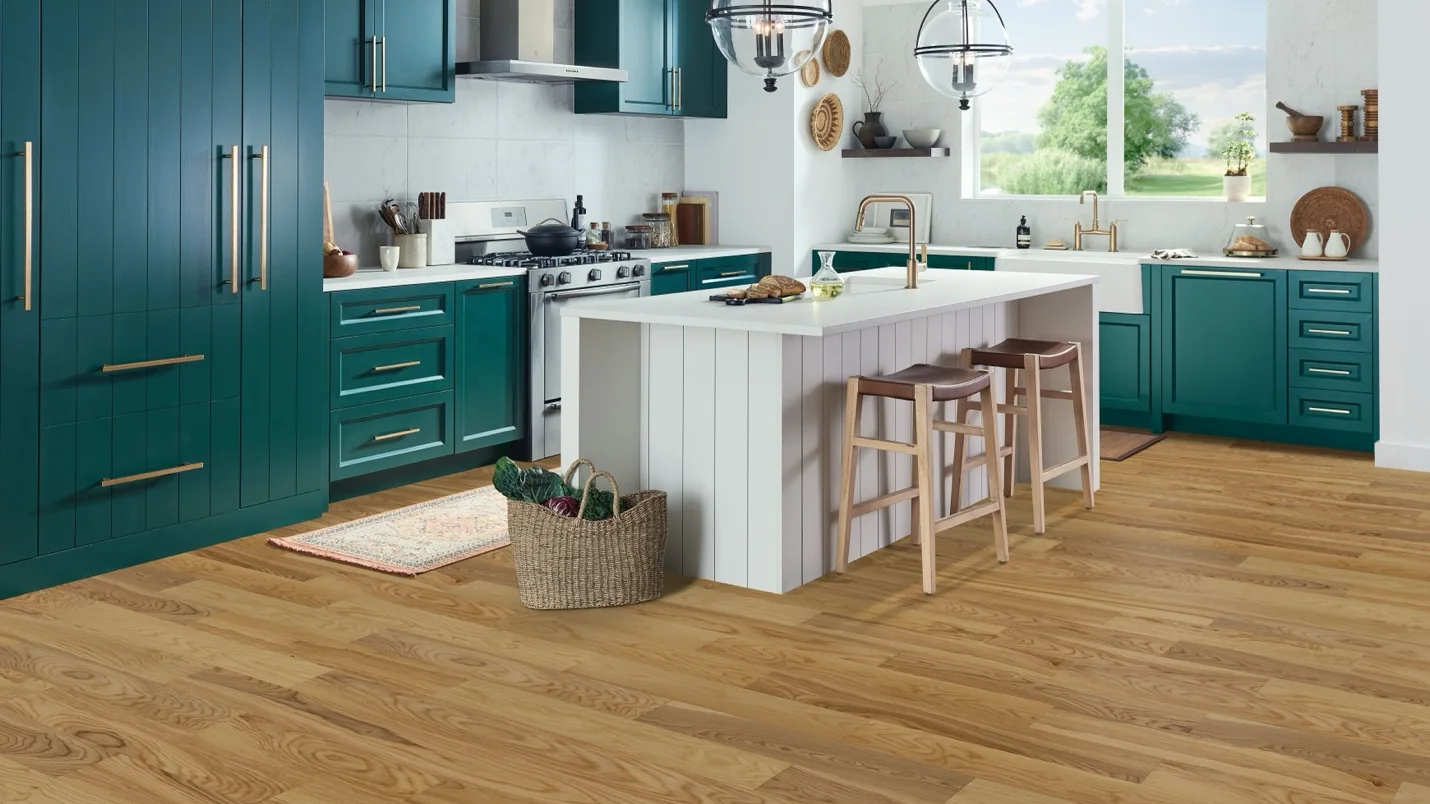
Quick answer: “Waterproof” is a documented, product-specific claim, not a promise that a room is floodproof. Compare the flooring format, approved room, seams and perimeter, subfloor-moisture requirements, cleaning rules, installation system, and exclusions. A product may resist topical water while its product documentation excludes water beneath the floor, adjacent materials, mould, flooding, or plumbing failures.
Start with the water claim, not the category
The word waterproof can appear on a sample, carton, product page, installation guide, or product documentation. Those documents may not use it in exactly the same way. Start with the written product documentation for the exact collection and SKU, then compare the current installation and care instructions.
Water beneath the floor, subfloor moisture, surrounding materials, mould, hydrostatic pressure, and plumbing failures are separate risks that a surface-water claim may not address.
That distinction is practical. A plank can carry a waterproof product claim while water still reaches a wall, doorway, floor opening, underlayment, or concrete slab. The label describes only what the manufacturer agrees to cover under the stated conditions.
Water-resistant is also a defined, product-specific claim. Some laminate instructions prohibit standing water and require spills to be removed promptly, so compare the documentation for the exact product rather than applying one claim to every laminate floor.
Is vinyl flooring waterproof?
Within vinyl, the details of the claim depend on the product. Vinyl includes products with different cores, backings, joints, adhesives, installation methods, and exclusions, and the seams stay the weak point in a wet room.
The Resilient Floor Covering Institute distinguishes flexible luxury vinyl tile and plank, rigid-core flooring, and sheet vinyl. Beaulieu Canada's vinyl overview also separates engineered luxury vinyl, glue-down luxury vinyl, and sheet vinyl.
Identify the format before comparing water claims. A floating rigid-core floor relies on its locking system and perimeter instructions. Glue-down flooring depends on the substrate, adhesive, edge fit, and installation. Sheet vinyl may reduce the number of seams in some rooms, but room width, layout, backing, seam treatment, and installation method still matter.
Ultra's guide to SPC rigid-core flooring explains what the acronym identifies and which specifications still vary by product.
Most vinyl planks are rated waterproof, which makes luxury vinyl and SPC flooring a natural place to start. The rating covers the plank, and water can still reach the subfloor through seams and edges.
Compare flooring formats and water paths
| Format | Questions to ask before choosing |
|---|---|
| Floating rigid-core or engineered luxury vinyl | How are joints locked, which underlayment or attached pad applies, what perimeter space is required, and what water beneath the floor is excluded? |
| Glue-down LVT or LVP | Which adhesive is approved, what substrate tests and preparation apply, how are edges finished, and how can a damaged piece be repaired? |
| Sheet vinyl | How many seams will the room require, which backing and installation method apply, and how must seams and edges be treated? |
| Porcelain tile | Which grout and setting materials suit a wet room, and how is the floor finished at drains, tubs, and doorways? |
| Water-resistant laminate | Which rooms are approved, how quickly must spills be removed, what standing-water exclusions apply, and what edge or perimeter instructions must be followed? |
Use this table to collect documents rather than rank entire categories. Water does not damage porcelain tile itself, which makes it the usual alternative to vinyl where water can pool. If the project is mainly a laminate-versus-vinyl decision, Ultra's laminate-versus-vinyl comparison covers that question in more depth.
Check seams, edges, and the perimeter
Water does not have to pass through the middle of a plank to create a problem. It may move through joints, cut edges, room perimeters, doorways, floor vents, pipe openings, damaged sealant, or transitions.
Ask how the complete installation handles each location. Floating floors may require expansion space around fixed objects. Sheet products may require a particular seam tape or sealer. Glue-down products depend on approved adhesive and substrate preparation. Those instructions cannot be transferred from one product to another.
Cabinets, islands, walls, baseboards, mouldings, and adjacent rooms can also change the installation. A waterproof product does not turn expansion space into a sealed pan, and an unapproved sealant can interfere with movement or written requirements.
Separate surface water from subfloor moisture
Topical water starts above the finished floor. Slab moisture, leaks, and hydrostatic pressure come from below or outside the assembly. A product may address one condition while excluding the other.
Manufacturer installation guides commonly require the installer to inspect the substrate and perform specified moisture tests. The test method and passing limit vary by product and installation system. Do not borrow a number from another collection or assume that a dry-looking slab meets the requirement.
Waterproof flooring also cannot repair active leakage, drainage problems, a failed sump pump, foundation cracks, or suspected mould. Ultra's basement flooring guide covers below-grade assessment and choosing a basement floor.
Match the claim to the likely water event
Describe the water event before comparing floors:
- A small spill that is noticed and removed promptly
- Wet footwear or repeated surface moisture near an entrance
- Routine cleaning under the approved care instructions
- An appliance overflow or broken pipe
- Standing water that remains for an unknown period
- Moisture moving through a slab or trapped beneath the floor
- Flooding from outside the building
The first three may fall within some product claims when every condition is met. The others are commonly limited or excluded in reviewed product documents. The exact document controls, so avoid turning a marketing word into a universal promise.
Questions to bring to the showroom
Bring room photos, dimensions, subfloor information, and a description of past water exposure. Ask:
- What is the exact collection, SKU, and product format?
- Where do the product documents define waterproof or water-resistant?
- Which rooms and grade levels are approved in writing?
- What must happen at joints, seams, walls, doors, cabinets, and pipes?
- Which substrate test and passing limit apply?
- Which underlayment, vapour-control layer, adhesive, or seam product is approved?
- How quickly must spills be removed, and which cleaning methods are allowed?
- Which floods, leaks, standing-water events, and surrounding materials are excluded?
- Which invoices, labels, test results, and installation records must be retained?
Read the installation guide, care guide, and product documentation together. If they appear inconsistent, pause and ask the manufacturer or retailer which current instruction governs the exact product.
Compare current options with Ultra
Ultra Carpet & Flooring can help Mississauga homeowners compare current vinyl flooring options and the documents attached to them. Bring the room conditions and likely water events into the conversation rather than asking only whether a category is waterproof.
Contact the showroom to review current samples, room approval, installation requirements, care instructions, and documented exclusions. Product availability and claims should be confirmed from the current manufacturer documents before a final decision.