
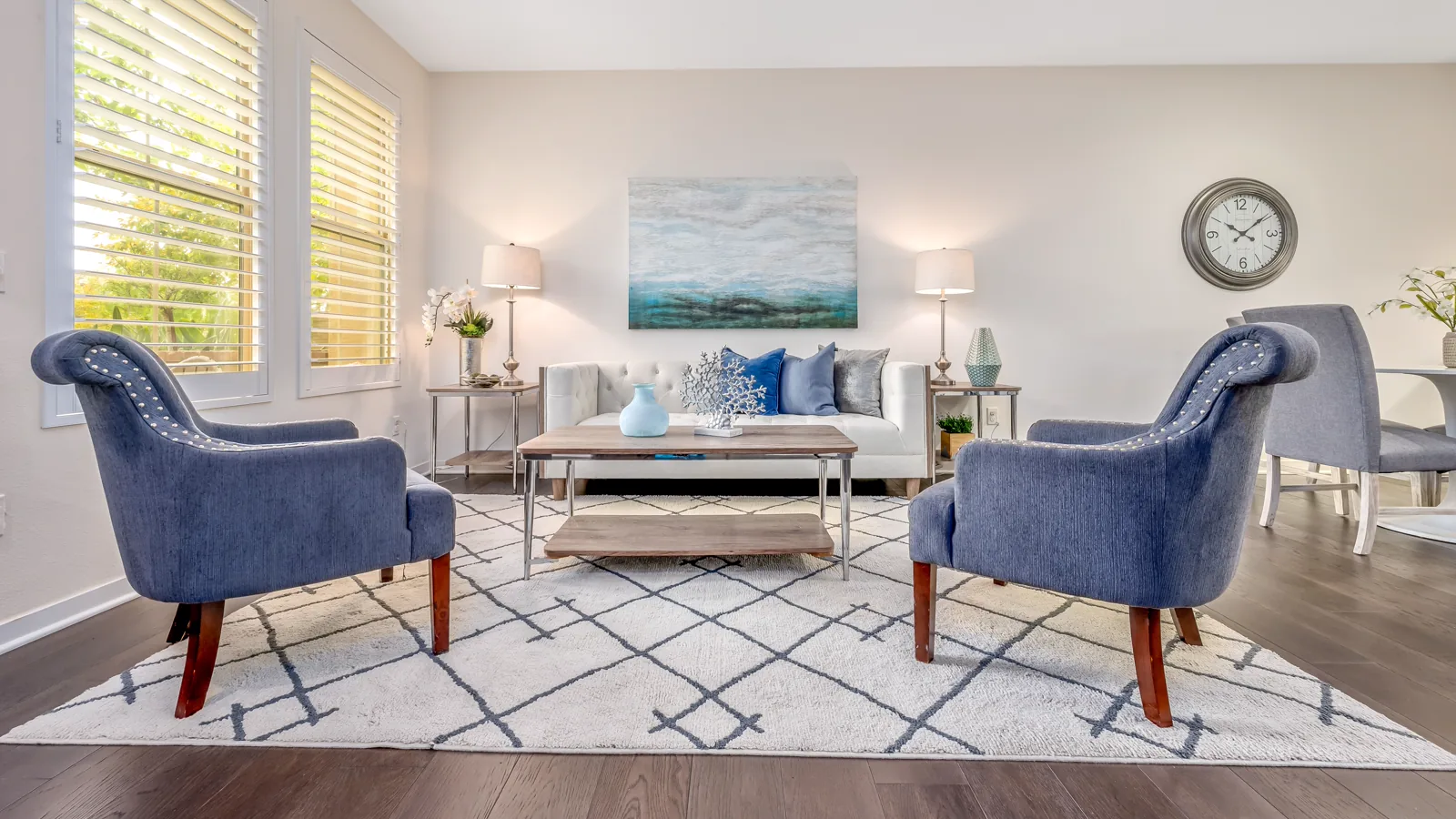
Quick answer: Start with the furniture arrangement, not a standard rug size. Measure the area you want to connect, mark the proposed rug edges with painter's tape and check doors, vents and walking paths. Then compare construction, fibre, pile, care and a rug pad that is compatible with both the rug and the floor underneath.
A useful area rug should look intentional, stay practical for the room and be identified clearly before you order it.
Start with the furniture layout
An area rug can define a seating group, add softness over a hard floor or create a clear path through an open room. It works best when its edges relate to the furniture rather than floating between unrelated pieces.
Before measuring, decide what the rug needs to connect. In a living room, that may be the sofa, chairs and coffee table. In a dining room, it is the table and chairs in both their resting and pulled-out positions. In a bedroom, it is usually the bed and the floor area where your feet land.
If you are still comparing flooring categories, the guide to flooring types for GTA homes explains how an area rug can add comfort and visual definition without replacing the installed floor below it.
How to measure for an area rug
- Measure the room, door openings, vents and the main furniture pieces.
- Arrange the furniture where it will actually stay.
- Decide which furniture legs should sit on the rug and keep that treatment consistent.
- Mark the proposed rug outline with low-tack painter's tape.
- Walk every route, open every door and pull out chairs before accepting the size.
- Record the maximum and minimum workable dimensions, not just one preferred size.
The taped outline is more useful than choosing from a size chart alone. It shows whether the rug will connect the furniture, leave a balanced border of flooring and avoid awkward narrow strips at walls or thresholds.
Area rug placement by room
| Room | Useful starting point | Check before ordering |
|---|---|---|
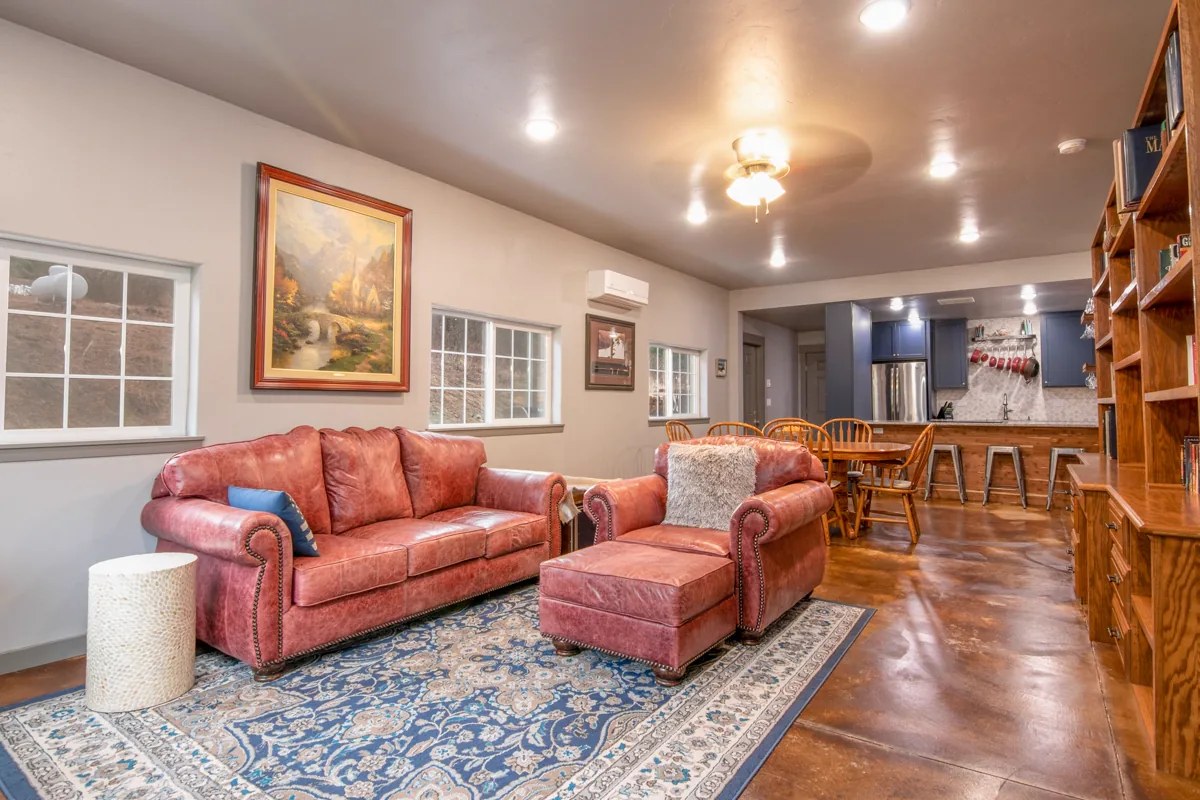
| Living room | Place at least the front legs of the main seating pieces on the rug, or place the whole seating group on a larger rug. | Furniture balance, walking paths, floor vents and a consistent border around the grouping. |
| Dining room | Size the rug from the table with any extension leaves in use, then allow room for chairs to remain supported when pulled back. | Chair movement, nearby cabinets, door swings and cleanability around eating areas. |
| Bedroom | Extend the rug beyond the sides and foot of the bed, or use separate runners where people step down. | Bed size, nightstands, floor registers, door clearance and symmetry. |
| Hallway or entry | Use a runner or rug that leaves a deliberate border and does not interfere with doors. | Door sweep, edge height, wet footwear, traffic and a compatible non-slip pad. |
| Open-concept room | Use the rug to define one activity zone rather than trying to cover every open area. | How the rug aligns with adjacent furniture groups and the main direction of travel. |
Common size recommendations are starting points, not rules. Furniture dimensions and circulation space can make two rooms with the same floor area need different rugs.
Compare construction and material
Once the size range is clear, compare the actual rug specifications. “Soft,” “durable” and “easy care” are not complete product descriptions. Ask what the rug is made from, how it is constructed, what backing it uses and which cleaning method is approved.
Hand-knotted rugs
Hand-knotted construction involves individually tying yarn to the rug's foundation. The knot type, fibre, density, finishing and origin can all affect the result. Ask for care guidance and view the complete rug, because natural and handmade variation may be part of its appearance.
Synthetic rugs
Synthetic is a broad category, not one performance level. Fibre type, pile, backing, colour method and construction still matter. Compare the exact product for traffic, sunlight, spills, pets and the approved cleaning routine.
Custom rugs and runners
A custom size can help when a standard rectangle leaves the furniture disconnected or conflicts with a hallway, stair landing or unusual room shape. Confirm the finished dimensions, edge treatment, pattern direction and placement before ordering. For runners, measure the narrowest point and every door swing rather than assuming the hallway stays the same width.
Ultra Carpet & Flooring offers custom rugs, hand-knotted rugs, synthetic rugs and runners in assorted sizes. Current collections and ordering options can change, so confirm availability and specifications with the Mississauga showroom.
Match pile and texture to room use
Low-profile rugs can simplify door clearance, chair movement and vacuuming in busy areas. A deeper or more textured surface may add softness, but it can also change how furniture sits and how easily crumbs, pet hair or grit can be removed.
Look at the rug from the doorway and from the seated position. Directional pile and side light can change the way colour appears. If pets use the room, check for loops or textures that could catch claws and review the broader guide to flooring for homes with dogs.
Choose colour and pattern in the room
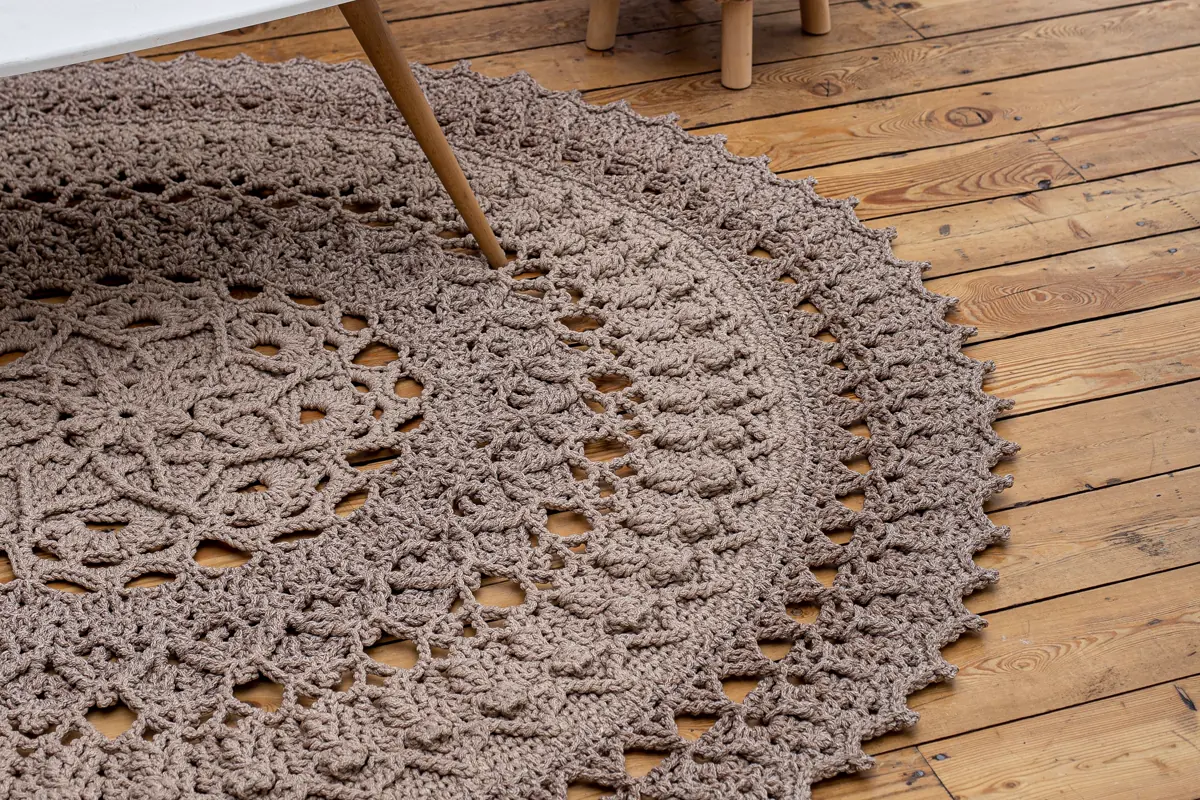
A small sample cannot show the full pattern repeat or the balance between light and dark areas. Compare the largest sample available with the sofa, wall colour, window light and installed floor. Photograph it in daylight and evening light, but make the final decision from the physical sample because screens alter colour.
Decide whether the rug should lead the room or support it. A strong pattern can become the focal point; a quieter texture can connect furniture without competing with it. If the rug will sit over wood, remember that covered and exposed areas can receive different amounts of light. The guide to choosing hardwood floor colours explains why species, finish and light exposure should be considered together.
Select the rug pad for the rug and floor
An area-rug pad is not the same decision as carpet underpad installed beneath wall-to-wall carpet. It needs to suit the rug's backing, the floor finish, the room and the required grip or cushioning. Ask the flooring and rug manufacturers which materials are compatible; an unsuitable backing or pad may mark or react with the surface below.
The pad should sit within the rug edges rather than showing outside them. Recheck the combined height at doors, transitions and locations where someone may catch a toe. If the rug shifts, ripples or develops curled edges, address the cause instead of relying on furniture to hide it.
Plan care and safety before buying
Read the care label before treating a spot or arranging professional cleaning. Fibre, dye, backing and construction can change what is safe. Ask whether the rug can be rotated, which vacuum setting is appropriate and how spills should be handled.
Keep edges flat and the rug stable. A study of rug- and carpet-related fall injuries found that older adults and their families should be aware of slipping and tripping risks associated with rugs, particularly where rugs are not secured or are exposed to moisture. The full study is available through the U.S. National Library of Medicine.
Bring this checklist when comparing area rugs
- Room and furniture measurements, including doors, vents and traffic paths.
- Photos of the room in daylight and evening light.
- The taped minimum and maximum rug dimensions.
- The installed flooring type and finish beneath the rug.
- Notes about children, pets, spills, sunlight and cleaning needs.
- The rug's fibre, construction, backing, pile and approved care method.
- A compatible rug pad and the combined finished height.
- For custom work, the final dimensions, edge treatment and pattern direction in writing.
Compare area rugs in Mississauga
Start with measurements and a furniture plan, then compare the rug in the context of the room. Ultra Carpet & Flooring can help you review current area rug options in Mississauga, including size, construction, texture, colour and care information.
Bring photos, measurements and samples of the flooring or fabrics that need to work with the rug.
Contact Ultra Carpet & Flooring