
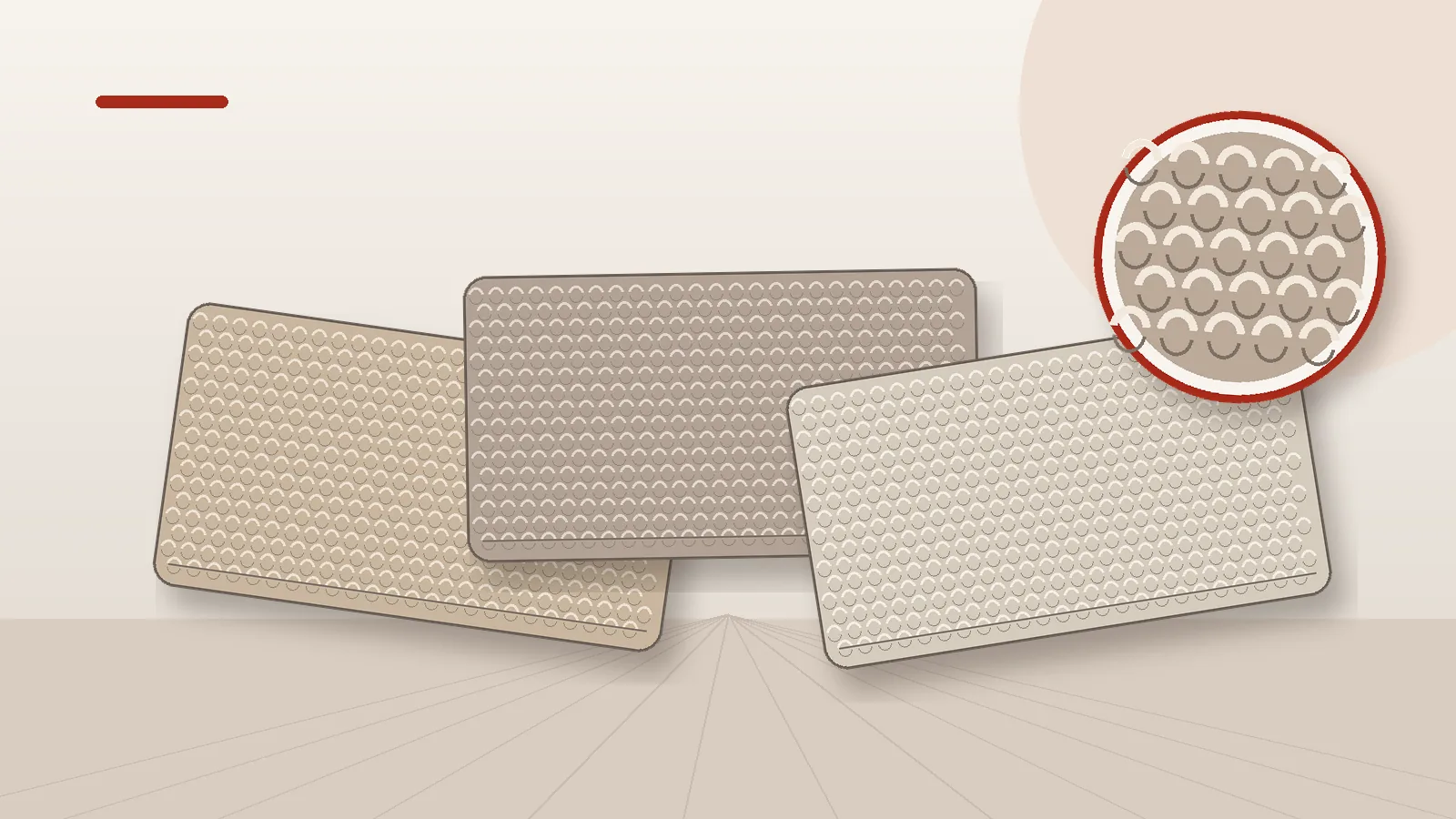
Quick answer: Berber carpet usually describes a loop-pile look, often with a low profile and flecked colour. It is not one fibre, quality level, or performance class. Compare the exact carpet's fibre, loop construction, density, room guidance, underpad requirements, care instructions, and sample before deciding whether it suits your home.
What is Berber carpet?
In flooring showrooms, “Berber” commonly refers to carpet with visible loops and a casual, textured appearance. Many familiar Berber styles use level loops and small darker flecks against a lighter background. Other products use loops of different heights to create a stronger pattern.
The name alone does not identify the fibre, backing, loop height, density, stain treatment, approved room, or installation method. Two Berber carpets can look similar while having very different specifications. That is why a useful comparison starts with the complete product label rather than the style name.
The Carpet and Rug Institute's selection guide separates carpet construction from fibre and recommends choosing both around room use, traffic, pets, sunlight, and other household conditions.
Compare the loop construction, not just the label
| Construction | What it looks like | What to check |
|---|---|---|
| Level loop | Loops stay at a similar height for an even, tailored surface. | Loop size, density, texture, traffic guidance, and whether joins or shading are noticeable on the sample. |
| Multi-level loop | Different loop heights create a pattern and more surface movement. | How the pattern aligns, where furniture will sit, and how the texture looks in side light. |
| Cut and loop | Cut yarns and loops combine to form sculpted or geometric effects. | Whether the product is actually sold as Berber, plus its fibre, care, and room-use information. |
“Berber” and “loop pile” are therefore related terms, not perfect synonyms. A broader overview of textured, plush, loop, cut-and-loop, and frieze options is available in the guide to five common carpet styles.
Fibre changes how a Berber carpet performs
Loop-pile carpets can be made from nylon, polyester, polypropylene or olefin, triexta, wool, and blends. Each fibre has its own balance of texture retention, abrasion resistance, stain and soil response, colour clarity, cleaning requirements, and feel. Construction and fibre work together, so neither should be judged in isolation.
Ask for the fibre content in writing and compare like with like. A dense nylon loop and a wool loop may both be called Berber, but they are not interchangeable. The same applies to two products made from the same fibre when their loop size, density, backing, or approved uses differ.
Our carpet comes from Masland, Beaulieu, Shaw Floors, Mohawk, and Kane. Availability varies, so the Mississauga carpet showroom should confirm current samples, ordering options, and specifications rather than assuming every collection is stocked.
Match Berber carpet to the room and traffic
Start with what happens in the room. Note entrances, walking paths, dining chairs, rolling furniture, direct sun, children, pets, and the likelihood of spills. Then compare those conditions with the exact product's residential-use and care information.
A low-profile loop may be considered for a hallway, family room, office, basement, or stairs, but the style name alone does not approve it for any of those locations. Stairs in particular require a product and installation plan suited to the stair shape, nosing, backing, underpad, and expected use. Review the product details before treating a general buying-guide recommendation as permission for a specific room.
If installation is part of the project, plan measurement, seams, transitions, stairs, preparation, and underpad together. The carpet installation page lists what belongs in a project-specific quote.
Is Berber carpet suitable for homes with pets?
Pets do not create one universal answer. Exposed loops can catch a claw, toy, or sharp edge, and a pulled loop can affect more than one point on the surface. Loop size, construction, fibre, pet behaviour, grooming, room use, and the manufacturer's guidance all matter.
Inspect a large sample and ask how the exact carpet should be vacuumed and repaired. Do not pull a loose yarn or make an unapproved repair. If snagging is a major concern, compare lower-profile loops with cut-pile alternatives before choosing. The guide to flooring for homes with dogs covers traction, comfort, spills, scratch visibility, and cleaning across several flooring categories.
Check colour, pattern, and seams with a large sample
Flecked Berber carpet can disguise small changes in appearance better than a completely uniform surface, but colour does not replace regular care. Light, medium, and dark combinations also respond differently to daylight, evening lighting, dust, and furniture.
View the sample flat on the floor and from the main doorway. For patterned or multi-level loops, ask how the pattern repeats and where joins may fall. Carpet has a directional surface, so light can make adjacent areas look different even when the material is the same. A room plan helps the installer discuss layout before material is ordered.
Choose underpad with the carpet system
The softest underpad is not automatically the right one. Low-profile and loop-pile carpets often need a firmer, lower-flexing cushion than some cut-pile products. Excess movement can affect the way the carpet feels and behaves.
Use the carpet manufacturer's current requirements for underpad type, thickness, and density, then account for the subfloor, doors, transitions, stairs, and adjoining floors. Select the carpet and underpad as one system rather than upgrading the cushion after the carpet decision has been made.
Review care instructions before buying
Ask which vacuum settings and attachments are approved for the exact loop construction. Some rotating brushes or aggressive settings may not suit exposed loops. Keep grit controlled at entrances, address spills according to the product instructions, and avoid applying an unverified cleaner simply because it worked on another carpet.
Ultra Carpet does not provide in-home cleaning for installed wall-to-wall carpet. Care questions should therefore be resolved through the product documentation and an appropriate carpet-care provider before purchase, especially if the household has recurring spill, pet, or allergy concerns.
Bring this Berber carpet checklist to the showroom
- Room measurements, photos, entrances, stairs, and adjoining flooring.
- Expected foot traffic, children, pets, direct sun, and spill concerns.
- The exact fibre, loop construction, backing, colour, and pattern repeat.
- Written room-use, underpad, installation, vacuuming, and cleaning guidance.
- A large sample viewed flat in both daylight and evening light.
- A quote that identifies material, preparation, underpad, seams, transitions, stairs, and labour scope.
Compare Berber carpet in Mississauga
Bring your room details and preferred colours to Ultra Carpet & Flooring at 2025 Dundas Street East, Unit 1. The showroom team can help you compare current loop-pile and Berber-style samples by construction, fibre, appearance, care information, and installation requirements.
Contact the showroom to ask about current carpet options or discuss your project.