
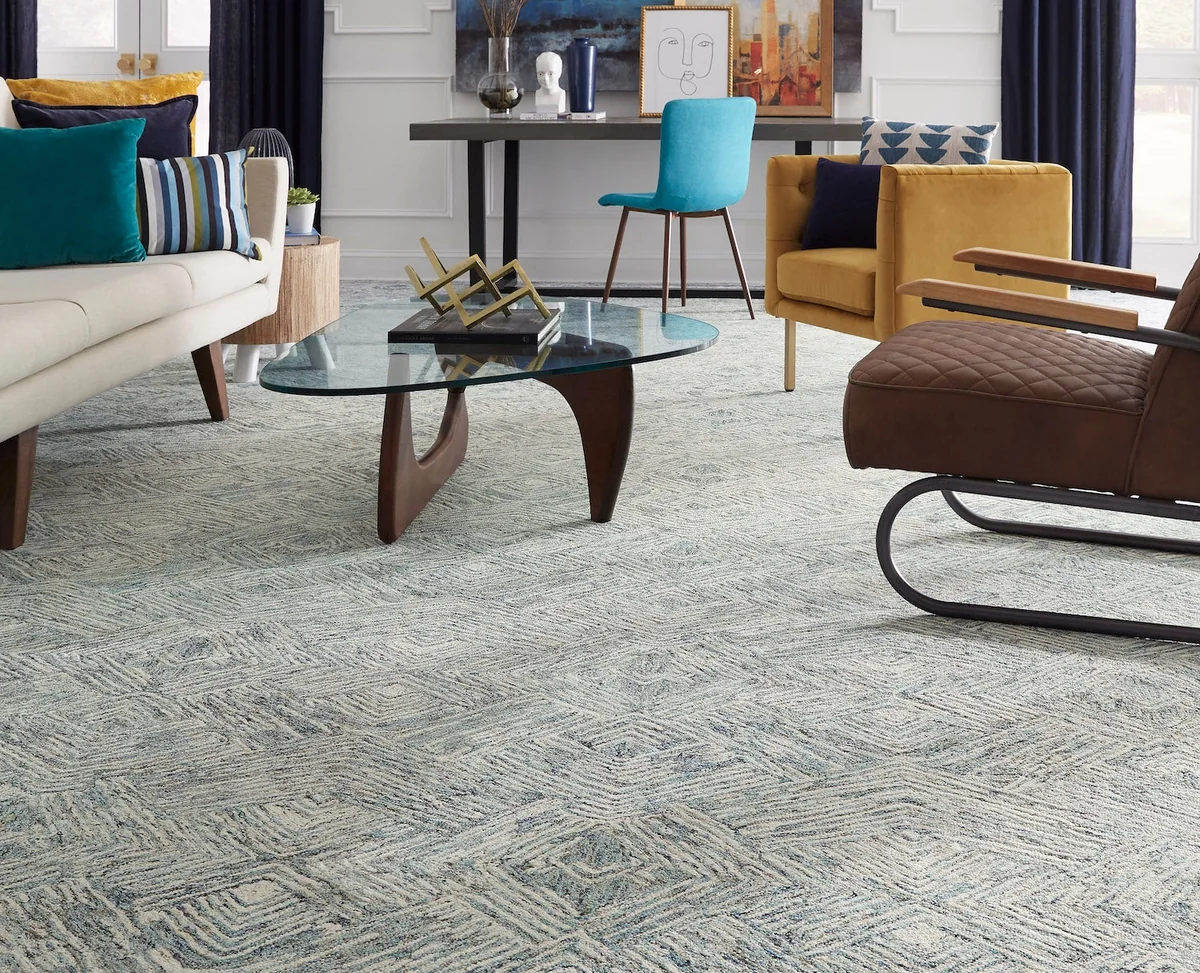
Quick answer: A cozy carpet is not one universal construction. Textured cut pile, plush or Saxony, loop pile, cut-and-loop, and frieze can all create a warm, inviting room. The right choice depends on the room, the look you prefer, how the surface will be used, and the care and installation instructions for the exact product.
What does carpet style describe?
Carpet style usually refers to how the yarn is arranged at the surface. The yarn may be cut, left in loops, or combined to form texture and pattern. Fibre, pile height, yarn twist, density, colour, backing, cushion, and installation also affect how a particular carpet looks and feels.
That is why two carpets with the same broad style name may behave differently in a home. Use the name to narrow the display, then compare labelled samples and the documents for the exact product. Ultra’s carpet selection overview is a useful starting point for the category.
Five carpet styles to compare for a cozy room
1. Textured cut pile
In a cut-pile carpet, the yarn loops are cut at the surface. A textured version sets the yarn in slightly varied directions rather than presenting a completely uniform face. That broken-up appearance can feel relaxed and work well with casual living rooms, family rooms, and bedrooms.
Texture does not establish wear performance, stain coverage, or cleanability. Compare the sample from several directions and under the room’s daylight and evening light. Ask how the selected fibre, colour, pile, cushion, and seam plan fit the room’s traffic and furniture.
2. Plush or Saxony carpet
Plush and Saxony styles use cut yarn to create a smoother, more even surface. They can give a bedroom, sitting room, or other quieter space a tailored look. The visual effect ranges from softly textured to very uniform, depending on the product.
A smooth pile may display shading, footprints, or vacuum marks differently from a more textured carpet. That is an appearance question, not automatically a defect or a measure of quality. Walk across a large sample if possible, view it from the room entrance, and decide whether the changing surface is part of the look you want.
3. Loop pile, including many Berber looks
Loop-pile carpet leaves the yarn in loops. Those loops may be level or arranged at different heights, producing anything from a quiet, tailored field to a more noticeable texture. “Berber” is often used for looped or flecked looks, but the retail label alone does not specify fibre, loop construction, or performance.
Ask for the exact construction before choosing a loop style for a home with pets, wheeled items, or active play. Claws and moving objects may interact with loops differently, and the manufacturer’s care guide should state the approved vacuum settings. Do not assume every loop carpet has the same requirements.
4. Cut-and-loop pattern
Cut-and-loop carpet combines cut yarn with loops to create a visible pattern or sculpted surface. The design can add depth without relying on a strong colour contrast, making it useful when the floor should contribute to the room rather than sit in the background.
Check the pattern at the scale of the whole room. Doorways, seams, stairs, and irregular walls can affect how repeats line up and how much material the installation requires. A small sample shows colour and texture, but a larger display is better for judging pattern direction and repeat.
5. Frieze or highly twisted cut pile
Frieze styles use tightly twisted cut yarns that curl and create a lively, informal surface. The look can suit relaxed family spaces where a perfectly smooth finish is not the goal. Products sold under this label still vary in fibre, pile, colour, backing, and approved use.
Use the twist and texture as design information, not as a blanket promise about durability or maintenance. Ask how the exact carpet should be vacuumed, how spills are handled under its care guide, and whether its construction is approved for the intended room and stairs.
Look beyond the style name
Cozy rooms are shaped by more than pile construction. Warm or muted colours can change the mood, while lighter and darker samples can look different as the sun moves through the room. Carpet and an approved cushion may also soften the feel underfoot and reduce reflected sound, but the complete specified assembly matters.
Plan for real use. Note the busiest walking paths, exterior doors, pets, children, rolling furniture, and likely spill areas. For a smaller zone that needs softness or colour without wall-to-wall carpet, compare area rugs and runners with a compatible rug pad. A removable rug can be cleaned through our area rug cleaning service, which does not cover wall-to-wall carpet.
Questions to ask before choosing
- What are the fibre, pile construction, backing, and intended room use?
- Which cushion or underpad is approved for this exact carpet?
- How will seams, pattern direction, stairs, doors, and transitions be planned?
- Which vacuum settings, spot-cleaning products, and professional methods does the manufacturer permit?
- How may the surface show shading, footprints, traffic, or colour variation?
- What care limits apply to stains, pulls, pet damage, or appearance changes?
- Can you view a large sample in the room’s actual light before ordering?
Keep the product label, technical sheet, care guide, and installation instructions together. If the selected carpet changes, repeat the review for the replacement rather than carrying over assumptions from the first sample.
Compare carpet styles in person
Bring room photos, rough measurements, colour references, and notes about traffic, pets, and furniture when you compare samples. Mississauga homeowners can ask what samples are available to review and which documents apply to a shortlisted product.