
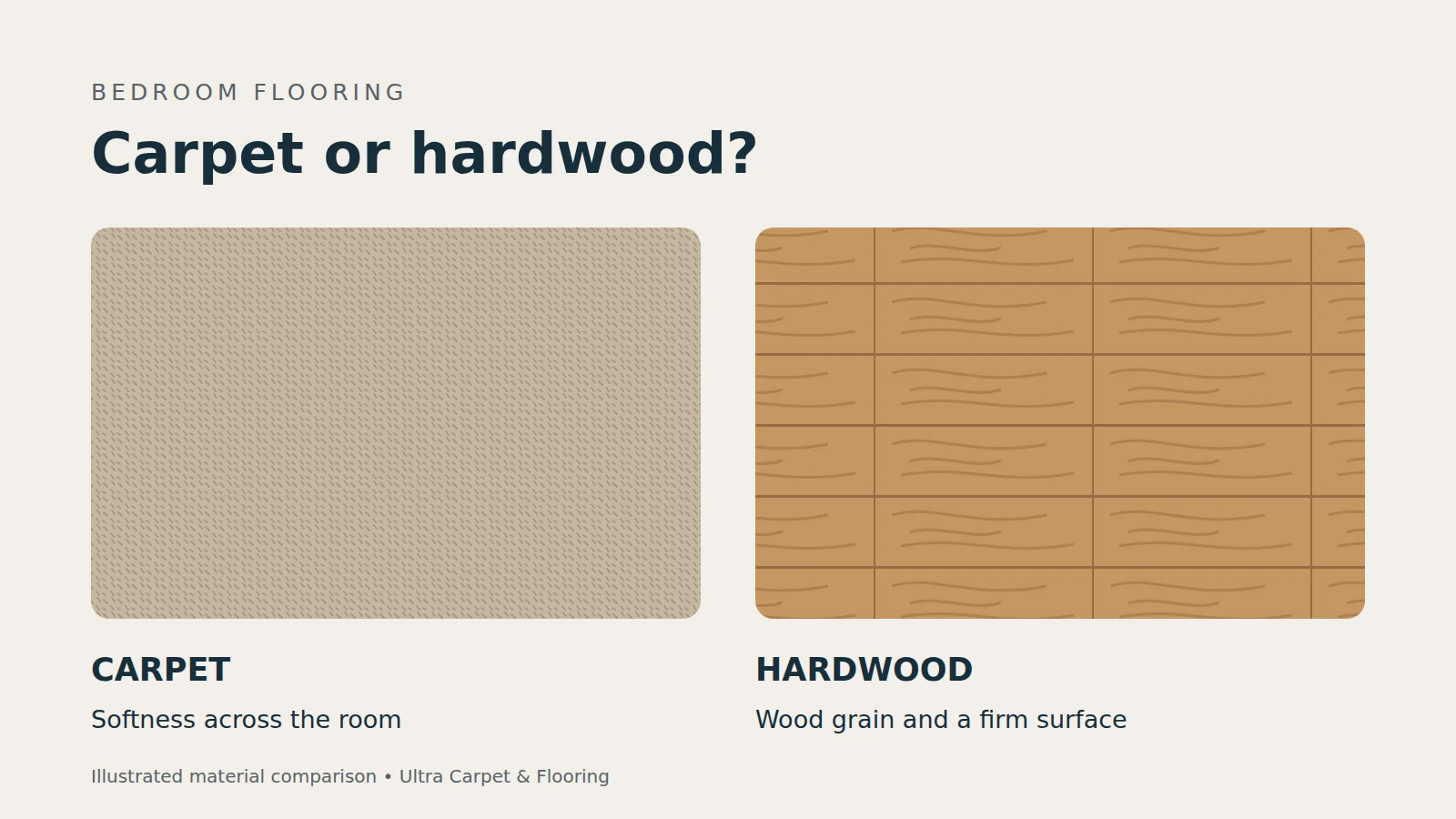
Quick answer: Choose carpet when softness across the bedroom is your priority. Choose hardwood when visible wood grain, a sweepable surface and continuity with adjoining rooms matter more. Hardwood with an area rug can provide a middle ground. The right choice depends on your cleaning routine, furniture, room conditions and the exact flooring system, not a universal winner.
Start with how you use the bedroom
A bedroom floor does more than sit beneath the bed. It is where you step down in the morning, walk to the wardrobe and move a chair or bedside table. A quiet guest room and a child's bedroom used for play can need different surfaces.
Before comparing samples, list your three priorities. They might be softness, straightforward cleaning and matching the hallway. Separating must-haves from preferences makes the carpet-versus-hardwood decision easier.

Comfort and sound: compare the complete floor
Carpet puts a textile surface beneath your feet throughout the room. That can be appealing beside a bed, particularly when you prefer not to wear slippers. Its feel depends on the fibre, pile, construction and underpad; the deepest pile is not automatically the most supportive choice.
Compare carpet with the underpad proposed for installation rather than judging a loose sample alone. The Carpet and Rug Institute's selection guidance explains why cushion must meet the carpet manufacturer's thickness and density requirements. Our carpet underpad guide covers that decision in more detail.
Carpet and suitable underpad can soften footfall and help reduce sound reflected within a room. That is not the same as soundproofing the floor below. Hardwood feels firmer, and footsteps or moving furniture may be more noticeable. A rug can soften part of the surface, but it does not reproduce wall-to-wall carpet.
For a condo bedroom, obtain the building's flooring rules before choosing either system. Any acoustic requirement applies to the specified assembly and installation, not simply a product described as quiet.
Cleaning: which routine will you keep up?
Carpet needs regular vacuuming and prompt attention to spills using the approved method. Check whether the vacuum you own suits the pile, especially if it has an aggressive brush setting. Furniture layout matters too: leave practical access around the bed and under movable pieces.
Hardwood provides an exposed surface that can be swept or vacuumed with a suitable hard-floor attachment. It still needs care. Grit can mark the finish, and spills should be removed promptly. Follow the selected floor's cleaning instructions rather than treating every wood floor alike; avoid steam or excess water unless the manufacturer explicitly permits the method.
Neither option is maintenance-free. If a rug sits over hardwood, include its vacuuming, spot care and the floor beneath it in your routine. Do not choose flooring on a promise that it will cure allergies or eliminate dust.
Pets, children and bedroom furniture
Think about what actually happens in the room. A pet sleeping beside the bed, a desk chair or a child playing on the floor changes the comparison.
- Pets: compare the exact carpet texture for possible claw catches and check approved spot-care methods. For hardwood, discuss the species, finish and how visible marks may be. Neither category is scratch-proof or stain-proof.
- Desk chairs: confirm an appropriate chair mat or floor-protection system for the selected surface. Rolling resistance and protection needs differ between carpet and wood.
- Heavy furniture: ask about suitable protectors and moving methods. Carpet can show furniture impressions, while dragging a bed or dresser can damage a wood finish.
- Spills: plan prompt cleanup. A bedroom beside a bathroom is not a reason to assume either floor can tolerate repeated wetting.
Appearance: look beyond a small sample
Carpet can create a continuous, soft-looking background around furniture. Some smooth piles show footprints and vacuum tracks more readily than textured styles. View the sample from the doorway and beside the bed to decide whether that movement in the surface bothers you.
Hardwood brings grain, board variation and plank direction into the room. A finish that looks subtle in the showroom can appear more reflective beside a bedroom window. Compare samples with the bed frame, wardrobe, skirting and hallway floor in both daylight and evening light.
If matching existing wood is important, check the full specification rather than choosing by colour alone. Species, width, thickness, finish and wear can prevent an exact match. A deliberate transition may look better than an almost-matching floor.
Solid or engineered hardwood in a bedroom?
Hardwood is not a single construction. Solid hardwood is wood through the plank; engineered hardwood has a real-wood surface over a layered core. The room's location, subfloor and moisture conditions help determine which products and installation methods are suitable.
Do not assume that a basement bedroom can take the same floor as an upstairs bedroom. Solid hardwood is generally not suitable below grade, and engineered products still require specific approval and moisture checks. Neither construction fixes a damp subfloor. Compare the options in our solid-versus-engineered hardwood guide before narrowing the sample list.
Could hardwood with an area rug be the compromise?
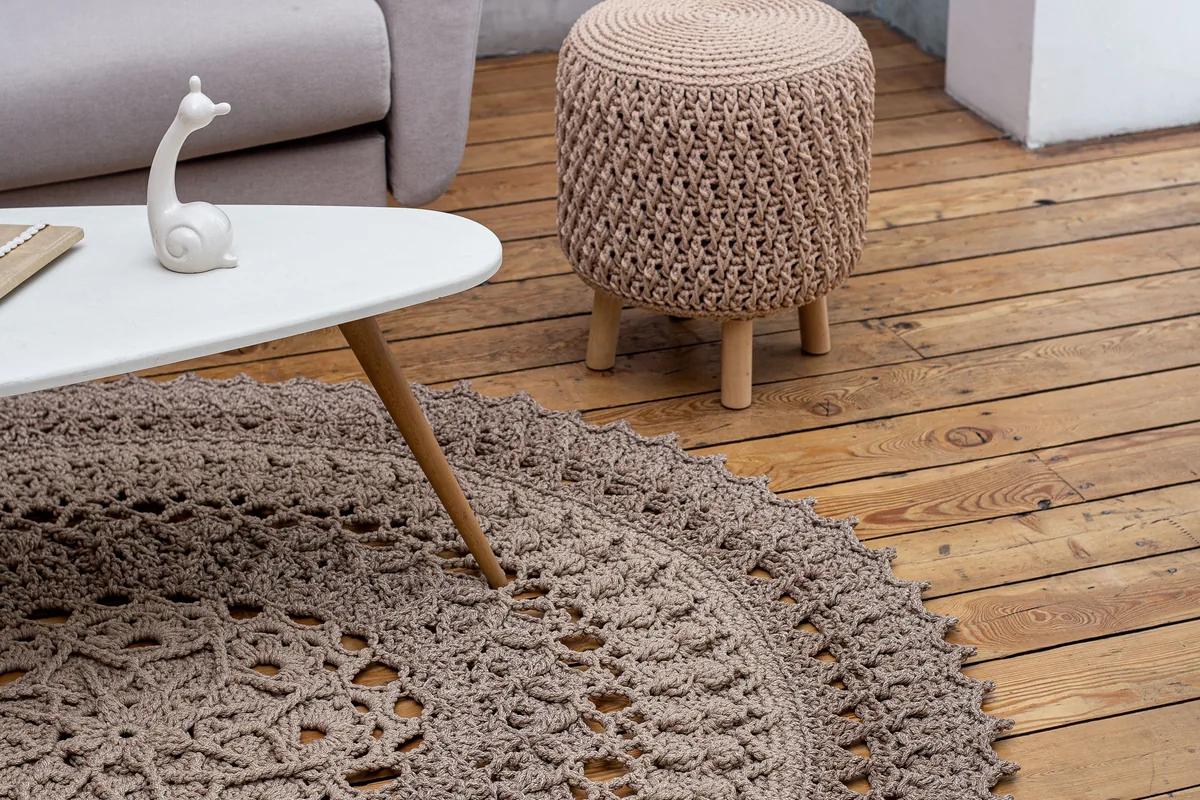
A rug can provide softness where you step out of bed while leaving wood visible elsewhere. Plan its size from the bed and the walking routes, not just a standard rug dimension. Check that doors open freely and the edges do not land awkwardly in a frequently used path.
Choose a rug pad compatible with both the rug backing and the wood finish. Keep the rug stable and edges flat, and remember that covered and exposed wood can age differently with light. Our area rug size and placement guide explains what to measure before ordering.
Compare quotes on the same scope
A material-only price does not settle the bedroom flooring decision. Ask each quote to identify removal and disposal, subfloor preparation, the selected product, underpad or other required materials, installation, transitions, trim and furniture handling where applicable.
For carpet, confirm the underpad and proposed seam locations. For hardwood, confirm the construction, installation method and how the new floor meets adjacent surfaces. Include a rug and compatible pad in the comparison if they are part of your hardwood plan. Ask what is included and what would require a separate decision.
A practical bedroom flooring checklist
- Rank softness, cleaning, sound and appearance in order of importance.
- Bring room measurements and photos showing doors, furniture and adjoining floors.
- Describe pets, play areas, desk chairs and any building requirements.
- Compare complete systems: carpet with approved underpad, or hardwood with the required installation materials.
- Review care instructions and compare samples in the bedroom's light.
- Request an itemised quote with preparation and finishing details identified.
Compare bedroom flooring in Mississauga
Ultra Carpet & Flooring offers carpet options and solid and engineered hardwood flooring. Bring your bedroom photos and priorities to the showroom at 2025 Dundas Street East, Unit 1, Mississauga. Confirm current samples and product specifications before making your final choice.
Contact Ultra Carpet & Flooring to discuss your room and request a flooring quote.
