
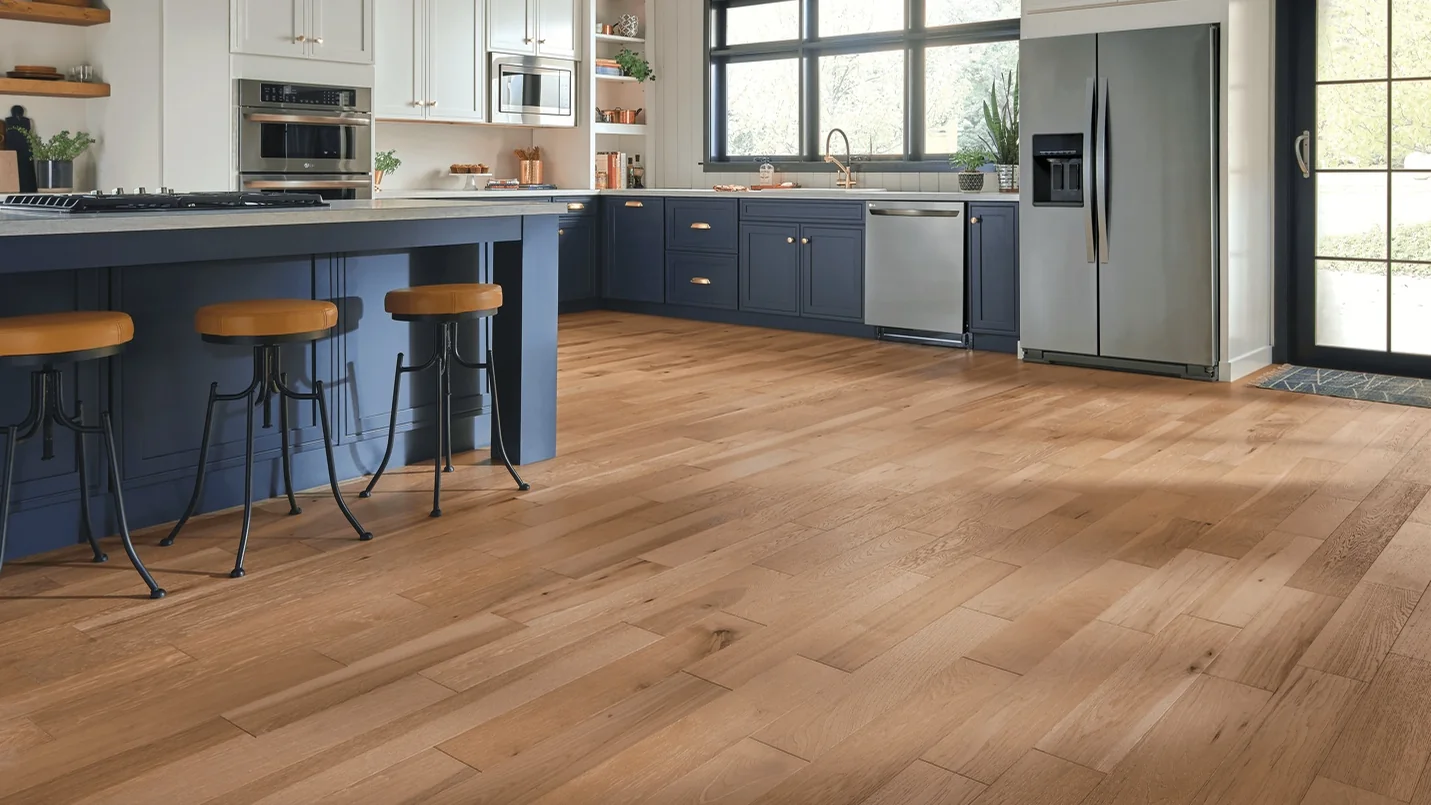
Quick answer: Solid hardwood is wood through the full board thickness, while engineered hardwood uses a real-wood wear layer over a layered core. Engineered construction can improve dimensional stability in some settings, but approval still depends on the exact product, room, subfloor, installation system, and product documentation. Neither category is automatically waterproof or suitable everywhere.
What solid hardwood flooring is
A solid hardwood board is milled from one piece of wood. The species, grade, dimensions, profile, moisture condition, finish, and installation method all affect the finished floor.
Its usable thickness may allow sanding and refinishing, but the number of future refinishes cannot be predicted from the category name. Board thickness, groove depth, condition, flatness, previous sanding, and installer judgment matter.
What engineered hardwood flooring is
Engineered hardwood has a real-wood surface bonded to a layered core. The core may use plywood, multiple wood plies, fibre-based material, or another documented construction.
Wear-layer thickness, core design, backing, adhesive, dimensions, finish, and edge system vary. Two engineered products may have different installation and refinishing limits.
Construction differences at a glance
| Question | Solid hardwood | Engineered hardwood |
|---|---|---|
| Main construction | One piece of wood | Real-wood surface over a layered core |
| Product variation | Species, grade, cut, dimensions, finish | Surface species, wear layer, core, backing, dimensions, finish |
| Movement | Responds to environmental moisture | Layered construction may reduce some movement, subject to the product |
| Refinishing | Depends on remaining usable wood | Depends heavily on wear-layer thickness and manufacturer approval |
Room conditions, moisture, and installation grade
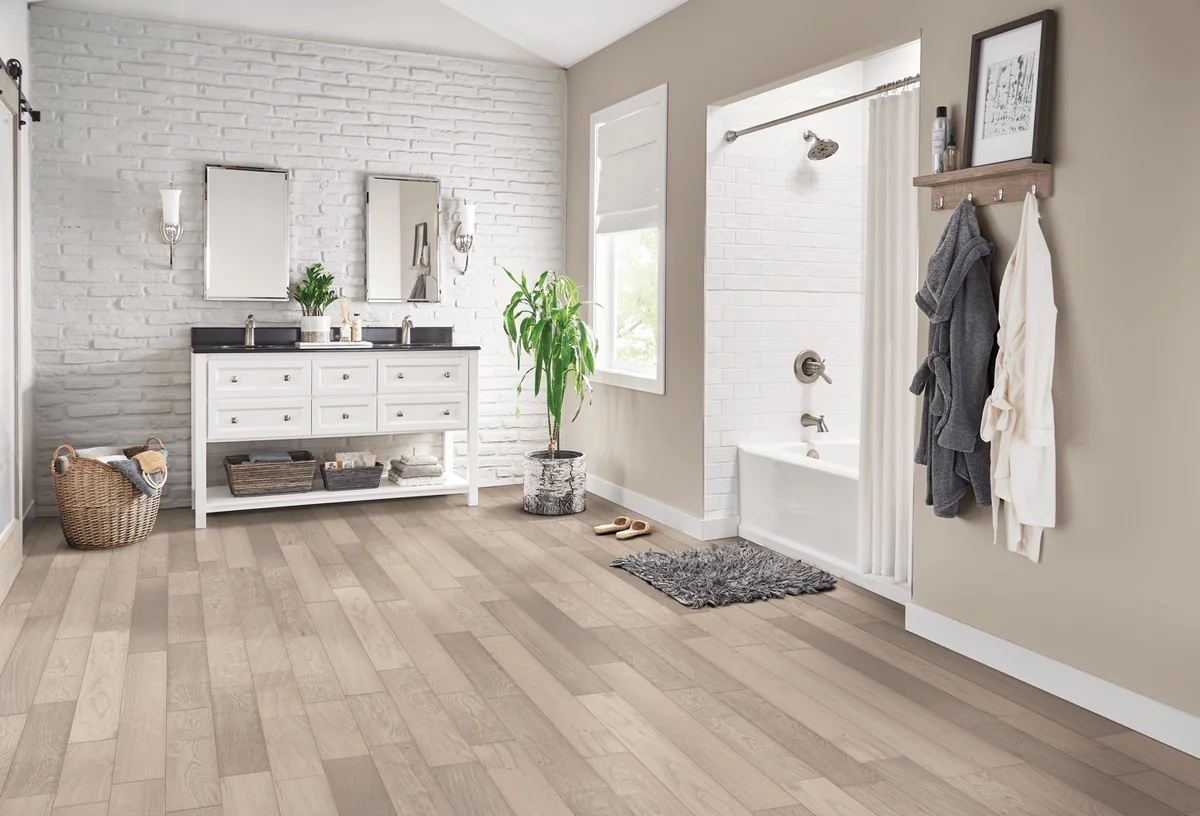
Room conditions should be checked before selecting either construction. Look for leaks, dampness, staining, musty odour, efflorescence, active cracks, drainage problems, or recent flooding.
Natural Resources Canada recommends addressing persistent moisture and structural concerns before finishing basement spaces. Ultra’s basement flooring guide discusses that room-specific decision in more detail.
The National Wood Flooring Association installation guidelines treat below-grade use as product- and manufacturer-dependent. Solid hardwood stays above grade and off concrete. Engineered hardwood is the option for basements, concrete slabs, and condos, where the manufacturer approves it for that use.
Subfloors and installation methods
Concrete, wood panels, existing floors, and radiant systems can impose different requirements. Check flatness, strength, cleanliness, moisture, temperature, and approved preparation.
Natural Resources Canada explains that moisture can come from runoff, groundwater, condensation, plumbing, and foundations. A surface that looks dry on one visit may still require measurement and source correction.
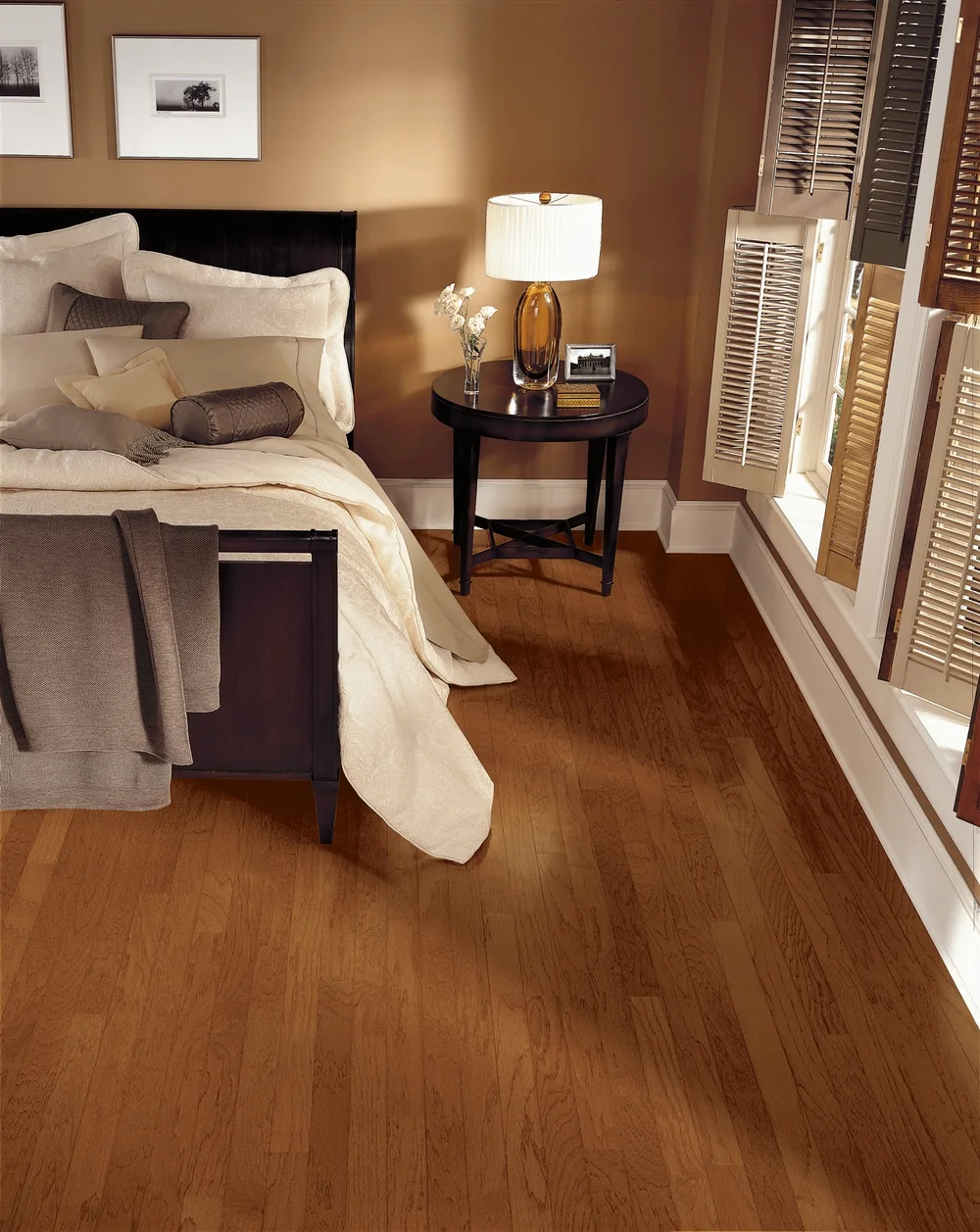
Solid boards are usually nailed or stapled to a wood subfloor. Engineered planks can be nailed, glued, or floated over an underlay, and gluing or floating is how they go over concrete. Use the current installation document for the exact product and substrate.
Wear layers, sanding, repair, and refinishing
Solid hardwood may provide more wood above the tongue and groove than a thin engineered wear layer. That does not create a fixed refinishing count.
For engineered flooring, ask for the wear-layer thickness and written refinishing guidance. Some products permit sanding under defined conditions. Others allow only recoating or limited repair. Aggressive sanding can expose the core.
Also ask how individual boards can be repaired, whether matching stock is available, and how finish sheen or colour may change over time.
Appearance and product selection
Both constructions can provide real-wood grain, species variation, stains, textures, widths, and finishes. Appearance should be judged from an approved sample that represents the actual product.
Confirm:
- Species, grade, character, and colour range
- Board dimensions and bevel profile
- Finish, sheen, texture, and care requirements
- Expected variation between sample and delivered material
- Current stock, availability, installation method, and product documentation
Questions to ask before selecting a product
Bring room and subfloor information when reviewing current hardwood flooring options. Ask these questions for each candidate:
- Is it approved for the room’s grade and moisture conditions?
- Which subfloors and installation methods are allowed?
- What testing, acclimation, expansion, and humidity limits apply?
- Can it be sanded, recoated, or repaired, and under what conditions?
- Which documented exclusions depend on site preparation or installation?
The better choice is the documented product that fits the room and installation plan. A category-wide slogan cannot provide that approval.